Rust Mountain Base Hiding in Plain Sight
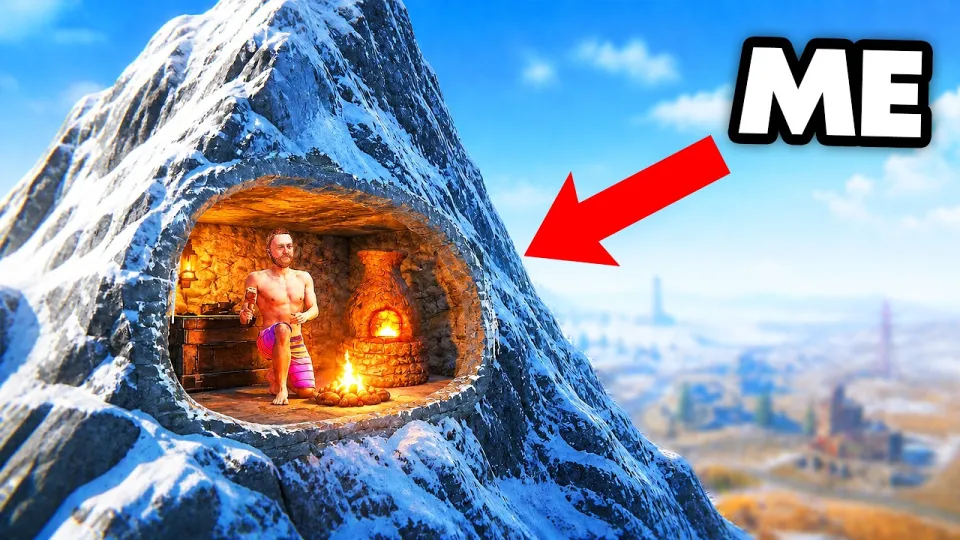
Video: I Lived in a Secret Mountain Base in Rust
Want articles like this for your own video to promote it on YouTube and Google? Order them through the Telegram bot @sat_sit_bot. Articles with your video embedded are written and posted by the bot itself — on popular topical sites (no ads). Your first 50 articles are free.
· based on the channel Memeio
A secret mountain base in Rust is a small, low-cost structure placed on terrain that other players rarely scout — a crevice, a slope behind rock, or a ledge hidden from the common flight paths — and its survival depends far more on camouflage and upkeep discipline than on walls or turrets. In practice, a hidden mountain base wins because raiders do not spend explosives on something they never see. Memeio's run on a secret mountain base shows the same logic in action, and the channel's updates are posted at Memeio on X.
What a Rust mountain base actually is
A mountain base is not a building style but a placement strategy: the structure is squeezed into terrain so that only one or two faces are visible from the ground, and the silhouette disappears against rock and snow. That is why the classic complaint about "secret" bases — that they are just a 2x2 sticking out of a peak fifteen feet from two other bases — misses the point. A base on a summit is visible from everywhere; a base cut into a slope is visible from almost nowhere.
The trade-offs are real and worth listing before you commit:
- Space. You get room for a small footprint — often a 1x2 or a compact 2x2 — so storage, furnaces and a workbench compete for the same few squares.
- Access. Mountain terrain slows movement, and a base high up means long runs for wood, stone and scrap.
- Exposure. Slopes have blind spots, but peaks and ridge lines are the most-watched ground on the map.
- Upkeep. Small bases are cheap to maintain, which matters most for solo players who cannot farm for a clan-sized compound.
Camouflage, not fortification
The core principle of a hidden mountain base is that detection is the real defense; a raid you never receive costs nothing. Players who build on mountains often assume height equals safety, but height equals visibility — anyone flying, running a monument route, or scouting for a raid sees a roof on a ridge from a long distance.
What actually helps:
- Match the surroundings. Stone and snow terrain hide stone-tier structures far better than sheet metal or bright skins.
- Use existing geometry. A base tucked behind a rock outcrop or under an overhang has natural cover on two or three sides.
- Keep the profile low. Fewer floors, no towers, no visible wind turbine or large furnace chimney.
- Avoid paths. If a road, monument route or common spawn walk passes nearby, the spot is not secret, no matter how it looks.
The joke that a base is only invisible to people with cataracts is fair — camouflage in Rust is relative, not absolute. It reduces the number of players who notice you, and that is enough.
Solo survival and eco raiding on the mountain
Solo play on a mountain base is a loop of cheap gear, short trips and opportunistic raiding rather than a push toward explosives. The mountain gives a solo player one big advantage: most fights happen below, on flat ground, where groups rotate — while the base itself sits outside the usual traffic.
A practical early-wipe loop looks like this:
- Land near the mountain, not on top of it, and gather stone and wood on the slopes where few players farm.
- Build the smallest viable core — a single room with a door, a small box and a furnace — and expand only when the location proves quiet.
- Craft spears and a bow before anything else; a wooden spear is the cheapest tool that can break a wooden door or a soft-side wall.
- Raid soft targets: unfinished bases, decayed structures and solo shacks, not clan compounds.
- Bank loot in the mountain base and never carry more than one trip's worth.
One trick that pays off repeatedly is spear recycling: broken wooden spears can be turned into stone spears, so a stack of cheap spears effectively doubles your raid tools for the cost of a little stone. For a solo player with no explosives, that is the difference between one door and three.
Why big bases fail and tiny ones last
Big bases fail because they advertise loot and invite a raid; tiny bases last because the expected payout does not justify the explosives. This is the same reasoning that carries over from other survival games, where a 1x2 wedged into a waterfall pocket can go untouched for years on an official server while a fortress nearby gets wiped every week.
The math is simple. A raider picks a target by estimating loot per explosive, and a hidden 1x2 with a few boxes scores badly on that estimate even if it is found. Meanwhile the base costs almost nothing to rebuild, so losing it does not end the wipe — you relocate and continue.
There is also a psychological factor that shows up in trap bases and mountain ambushes: raiders get angry when a small base kills them, but they rarely come back with a full raid crew for a shack. The best raid defense, as long-time survival players put it, is never being raided at all.
Common questions about hidden bases
Most doubts about secret mountain bases come down to whether the spot is really hidden and whether the effort is worth it.
- Is a mountain base actually invisible? No. It is less noticeable. Camouflage buys time, and time is what a solo player needs to farm and raid.
- Is a peak better than a slope? Almost never. Peaks are scouted first; slopes and crevices are checked last, if at all.
- Does the spot survive a wipe? The map layout may change, and other players learn popular locations. Re-scout your spot each wipe instead of rebuilding from memory.
- What about cheaters? They see through terrain and walls, which is why base placement cannot protect you from everything. Report and move on; a hidden base still beats a visible one against legitimate raiders.
The takeaway
A secret mountain base in Rust is a discipline more than a build: small footprint, matched materials, low profile and cheap upkeep, backed by eco raiding instead of explosive pushes. The strategy is not unbeatable — camouflage only reduces attention, and cheaters ignore it entirely — but it consistently outperforms big, visible compounds for solo players who cannot defend a fortress. Memeio's mountain-base run is a good demonstration of the mindset: treat the terrain as the wall, keep the loot small, and let other players walk past. Follow the channel's updates and clips via Memeio on X, and the music used in the videos is licensed through Epidemic Sound.
Key takeaways
- A secret mountain base in Rust works on camouflage and terrain, not on walls — a small footprint tucked into a slope stays unnoticed longer than a fortified 2x2 on a peak.
- Memeio's mountain-base run is built around solo survival: minimal loot, cheap upkeep, and raids done with spears and stone rather than explosives.
- Broken wooden spears can be recycled into stone spears, effectively doubling the raid tools a solo player carries into an early wipe.
- Big bases on mountain tops are the first thing clans scout; bases that blend into rock and snow survive because raiders simply never look there.
- Every wipe resets the map, so a hidden spot has to be re-checked each time — a location that worked once is not guaranteed to work again.
Questions & answers
Is a secret mountain base in Rust actually safe from raids?
It is safer than a visible base, but not immune. Camouflage reduces how many players notice you, which cuts the number of raids you receive. Cheaters and determined scouts can still find it, so keep the loot small and the rebuild cost low.
Where should I place a hidden base on a mountain?
Look for slopes, crevices and ledges behind rock outcrops rather than summits and ridge lines. A spot should be invisible from the main walking routes and monument paths, and it should match the surrounding terrain in material.
How does a solo player raid without explosives?
Use spears, a bow and soft-side access. Broken wooden spears can be crafted into stone spears, which effectively doubles your raid tools for a little stone. Target unfinished bases, decayed structures and solo shacks instead of clan compounds.
Do hidden bases still work after a wipe?
They can, but the map and player habits change. A location that stayed quiet once may be busy the next wipe, so re-scout the spot and check traffic before rebuilding the same design.
Source: I Lived in a Secret Mountain Base in Rust · Markdown version